- TED IWERE
- Posts
- 5 Expenses Draining Your Business Profits
5 Expenses Draining Your Business Profits

Ted Iwere
February 10, 2026

Hello! Welcome to my weekly newsletter where I share ideas on entrepreneurship and business development. Feel free to sign up for 1:1 Coaching or Group Coaching on starting, growing or scaling your small business.
Dear reader,
IN THIS ISSUE
5 Expenses Draining Your Business Profits
DEEPTHINK

5 Expenses Draining Your Business Profits
Most business owners focus obsessively on increasing revenue while ignoring the profit leaking from unnecessary expenses. They chase new customers while paying for services they don’t use, software nobody opens, and subscriptions long forgotten. Meanwhile, competitors who manage expenses strategically grow faster with the same revenue because they keep more of what they earn.
The solution isn’t cutting everything indiscriminately or operating on a starvation budget. It’s about systematic expense review that eliminates waste while preserving investments that actually drive business growth.
Here are five expense categories silently draining your profits and exactly how to fix them.
1. Fixed Expenses
Fixed expenses stay the same every month – rent, insurance, salaries, and loan payments. Most business owners accept these costs as unchangeable facts of life. This assumption costs them dearly because fixed expenses are often the biggest opportunities for savings, and cuts to fixed costs help their cash flow permanently every single month.
To start, you need to check if your fixed costs are really fixed. You do this by challenging your largest fixed expenses systematically. Can you negotiate a lower rent with your landlord, especially if you’ve been a reliable tenant for years or if comparable spaces are available for less? Can you switch to a cheaper insurance by shopping multiple providers or adjusting coverage levels that might be excessive for your current business size? Can you cancel subscriptions and memberships you rarely use, that industry association, that software platform, that service you signed up for two years ago and forgot about?
Review every recurring payment in your bank statements and ask whether each expense is truly necessary. Many business owners discover they’re paying for services they stopped using months ago simply because nobody bothered to cancel.
2. Variable Expenses
Variable expenses change based on your sales volume, like materials, shipping costs, packaging, and transaction fees, etc. The key to managing variable expenses effectively is focusing on the biggest categories first, using the 80/20 rule, where typically 20% of your expense categories account for 80% of your total spending.
To identify opportunities for variable cost savings, a good place to start is to identify your largest variable expense categories and concentrate your cost-reduction efforts there rather than wasting time scrutinising small expenses. If you spend ₦500,000 monthly on raw materials and ₦5,000 on office supplies, for instance, focusing on materials gives you 100 times more potential savings than obsessing over office supplies. The largest categories also usually offer the most negotiating power with suppliers because your volume matters to them.
For your biggest variable expenses, request quotes from at least three suppliers annually. Your current supplier might match or beat competitive quotes to keep your business, and even if they don’t, you’ll discover whether you’re overpaying. Negotiate volume discounts if your purchases have grown since you originally set pricing. Ask about payment terms that benefit your cash flow, such as net-30 or net-45 terms instead of paying upfront. Sometimes small changes in payment timing create significant cash flow benefits without reducing the total amount paid.
3. Expense Creep
This happens when small costs slowly increase over time without you noticing. Your phone bill goes up by ₦5,000 this month, your software subscription adds new fees next month, and your supplier quietly raises prices by 3% the following month. Each increase seems too small to worry about, but they compound into significant amounts over a year that can total hundreds of thousands in unnecessary spending.
You need to combat expense creep through monthly expense audits, where you review spending line by line, asking three critical questions for every expense: Is this expense helping us make money? Could we get the same result for less money? Do we still actually need this service or subscription? This systematic review prevents unnecessary spending from becoming a permanent fixture in your budget that nobody questions.
A good way to get ahead of expense creep is to set alerts in your accounting system for expenses that increase more than a certain percentage, say 3 – 5% from one month to the next, so unusual changes trigger immediate investigation.
When suppliers notify you of price increases, don’t just accept them automatically; ask why the increase is happening, whether you can avoid it by changing service levels, and what competitors are charging for equivalent services. Suppliers often test price increases, knowing most customers won’t push back, but those who do negotiate frequently get increases reduced or delayed.
4. Marketing Expenses
Marketing expenses need regular review because what works changes quickly. Social media platforms change their algorithms, customer preferences shift, advertising costs fluctuate, and competitors alter the landscape. Don’t keep spending money on marketing that doesn’t bring measurable results just because it worked previously or because you’ve always done it that way.
To ensure that what you’re spending on marketing is still bringing value to your business, you want to track the return on investment for every marketing channel by measuring how much revenue each generates compared to its cost. If your Facebook ads cost ₦50,000 monthly and generate ₦200,000 in sales, that’s working. If your print advertising costs ₦100,000 monthly and you can’t track any sales it produces, that’s a waste. Cut or reduce spending on channels with poor ROI and redirect that budget to channels proving effective.
Test new marketing approaches in small amounts before committing large budgets. Spend ₦20,000 testing a new advertising channel rather than immediately investing ₦200,000 based on a sales pitch or recommendation. Many business owners waste enormous amounts on marketing experiments that fail because they went all-in before proving the concept worked for their specific business.
Start small, measure results carefully, then scale only what works. Be willing to kill marketing initiatives quickly when data shows they’re not performing, regardless of how much you like the idea or how much you’ve already invested.
5. Professional Services
Professional services like legal, accounting, consulting, and specialised contractors can be necessary but expensive. The challenge is that many business owners pay premium rates for routine work that could be handled more cost-effectively.
Get quotes from at least three providers before hiring for any significant professional service work. Price ranges vary dramatically; you might find qualified accountants charging ₦50,000 monthly while others charge ₦150,000 for essentially identical services. Sometimes paying higher hourly rates actually costs less than paying lower rates for more hours if the higher-priced provider works more efficiently with better systems and more experience.
Ask whether you can handle some professional service tasks in-house to reduce costs.
For example, bookkeeping is different from tax preparation – you might do monthly bookkeeping internally and hire an accountant quarterly for tax filings and planning.
Review professional service relationships annually to ensure you’re still getting value. Long-standing relationships with lawyers, accountants, or consultants can become expensive through familiarity and lack of competitive pressure. This doesn’t mean constantly switching providers, but periodic check-ins about pricing and value ensure you’re not overpaying due to relationship inertia. Sometimes, a frank conversation about your budget constraints leads to better pricing or service modifications that maintain the relationship at a lower cost.
Action Steps
Expense management isn’t a one-time project; it’s an ongoing discipline that requires monthly attention. Schedule 30 minutes at the end of each month to review your expense reports systematically. Look for unusual increases, identify unnecessary spending, and question everything that doesn’t directly contribute to making money or delivering customer value.
The businesses that thrive aren’t necessarily those with the highest revenue. They’re often those who manage expenses most effectively. They keep more of what they earn, have stronger cash flow, survive difficult periods more easily, and ultimately build more valuable enterprises. Small expense discipline creates large profit advantages that compound over the years.
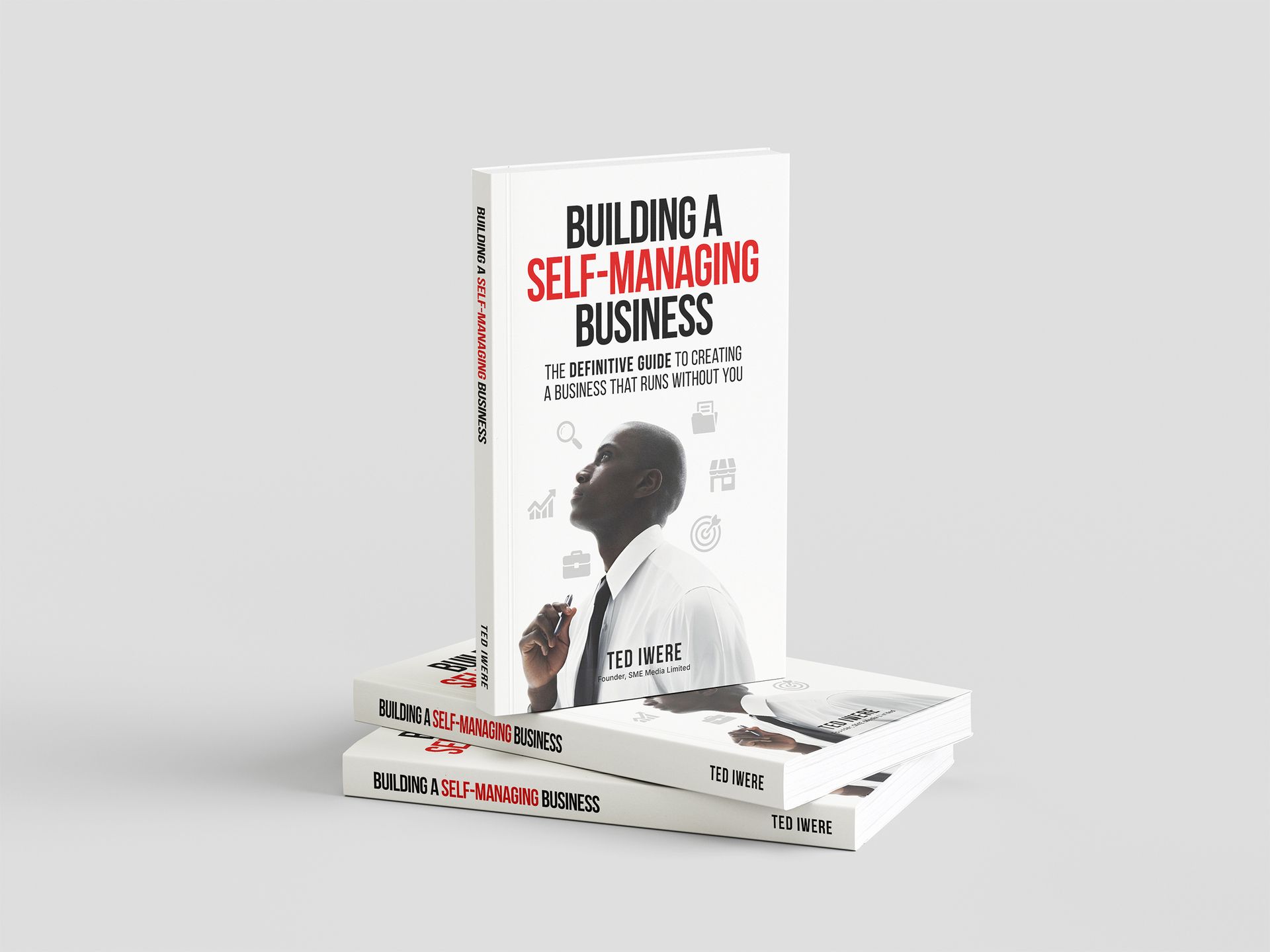
This article is adapted from our latest ebook – Building a Self-managing Business. It provides a complete guide for managing your business to run without you, and practical and proven tips and strategies for reducing major expense categories without sacrificing business effectiveness.
Ad - Book Your Luxury Vacation Home in Highbrow Ikoyi, Lagos

Find Your Perfect Short-term Stay in Ikoyi, Lagos.
Relax, Recharge and Experience Lagos. Unwind in top-notch amenities and stunning views. Discover a serene, equipped and stylishly furnished 1-bedroom haven. Book your home away from home!
Send a message to +234 809 673 8228 (Whatsapp) for more information
RESOURCES

HOW TO INVEST
Greate Bankable Business Plans
We help clients develop business plans suited to the Nigerian market. Our team will help you create a customised business plan, identifying opportunities, mitigating risks and outlining a roadmap for success.

BOOKS
Building A Self-Managing Business: The Definitive Guide To Creating A Business That Runs Without You
Did you build a business, or did you accidentally create a prison?
You started this journey for freedom, but if you can’t get through dinner without your phone ringing or take a vacation without checking email, you’ve hit the "Golden Handcuffs" phase. You aren’t just the boss; you are the bottleneck.
It is time to fire yourself from the daily grind and build a company that runs without you.
The "Building a Self-Managing Business" ebook is a 90-day roadmap tailored specifically for the Nigerian market. From navigating power costs to leveraging local tools like Paystack and Flutterwave, this ebook teaches you how to:
Escape the "Owner Trap": Move from doing everything to leading the vision.
Build Systems: Create SOPs that allow your team to make decisions without you.
Master Cash Flow: Protect your business against local economic shocks.

See us on YouTube
Receive our Newsletter
Join our Community
Visit our Website
Feedback
How would you rate this newsletter? Click here to share your thoughts
