- TED IWERE
- Posts
- 5 Ways To Empower Your Employees
5 Ways To Empower Your Employees

Ted Iwere
March 03, 2026

Hello! Welcome to my weekly newsletter where I share ideas on entrepreneurship and business development. Feel free to sign up for 1:1 Coaching or Group Coaching on starting, growing or scaling your small business.
Dear reader,
IN THIS ISSUE
5 Ways To Empower Your Employees
DEEPTHINK

5 Ways To Empower Your Employees
Most business owners say they want employees who take initiative, but their actions tell a different story. They require approval for every decision, question every choice their team makes, and step in to fix problems before employees can solve them. Then they wonder why their team waits passively for instructions instead of thinking independently.
The problem isn’t your people. It’s your empowerment system or lack of one. True delegation means giving someone both the authority to make decisions and the responsibility for outcomes, which requires trust on both sides and clear communication about boundaries. Without a framework for progressive empowerment, you’re stuck between two extremes: micromanaging everything or throwing people into situations they’re not ready for.
Building an empowered team takes time and patience, but it’s the foundation of everything else in your business. Great systems need great people to run them, and a strong culture needs committed team members to live it. When you have people who think like owners, you can finally step back and let your business run without you.
Here’s exactly how to build that team using the five (5) levels of employee empowerment.
Level 1 – Follow Specific Instructions
At the first level, new employees execute detailed directions exactly as given. You tell them precisely what to do, when to do it, and how to do it. They follow your instructions without deviation and check in frequently to confirm they’re on track. This level feels like micromanagement because it essentially is, but it’s appropriate for people who are genuinely new to your business, your processes, or the role itself.
The key at this level is providing crystal-clear instructions that anyone can follow successfully. Don’t assume people know what you mean or can fill in gaps in your directions. Break tasks down into specific steps and show them exactly what good work looks like. This level builds confidence through small wins and establishes trust by proving that following your guidance leads to success.
Most business owners keep employees at this level far too long because it feels safer and faster to just tell people exactly what to do. But employees trapped at this level never develop judgment or initiative because they never get to practice making decisions.
Level 2 – Choose From Options
At this level, employees select from pre-approved solutions to common problems. You’ve defined the acceptable choices in advance, and they decide which option fits the situation they’re facing.
For example, when a customer has a complaint, the employee can choose to offer a refund, a discount on their next purchase, or a replacement product, all options you’ve pre-approved without asking permission each time.
This level teaches decision-making within guardrails. Employees learn to assess situations and match them to appropriate responses, developing judgment while operating within boundaries that protect your business. They experience the satisfaction of solving problems independently, which builds both competence and confidence, but they’re choosing from your pre-determined options rather than creating solutions from scratch.
The transition from Level 1 to Level 2 is often uncomfortable for owners who are used to approving every decision. You’ll need to let go of some control and accept that employees might choose differently than you would, even when multiple options are acceptable. As long as they’re selecting from your approved options, trust their judgment and resist the urge to question choices that fall within the established boundaries.
Level 3 – Recommend Solutions
At Level 3, team members research problems and suggest approaches for your approval before implementing them. They identify issues, gather relevant information, analyse options, and come to you with recommendations rather than expecting you to solve problems for them. This level develops critical thinking and problem-solving skills because employees must work through the entire decision-making process, even though you retain final authority.
Employees at this level should present both their recommendation and their reasoning. Don’t just ask what they think should be done, ask why they believe that approach is best, what alternatives they considered, and what risks or benefits they see. This questioning process teaches them to think comprehensively about decisions rather than jumping to quick solutions without analysing implications.
Your role here is coaching rather than directing. By asking questions that deepen their thinking rather than immediately approving or rejecting their ideas when employees bring recommendations, you help them see factors they might have missed, consider additional perspectives, or refine their approach. Over time, their recommendations will require less refinement as they internalise your decision-making framework and apply it independently.
Level 4 – Make Decisions And Report
Here, employees handle issues independently and keep you informed after they’ve already taken action. They don’t ask for approval – they solve problems using their judgment and then report what they did and what happened. This level represents a major shift because you’re learning about decisions after they’re made rather than approving them in advance.
For this level to work, you must establish clear decision-making criteria and boundaries. Employees should know the financial limits within which they can act independently, the types of situations that still require your involvement, and the standards they should apply when making choices. With these boundaries defined, they can confidently make decisions knowing they’re operating within acceptable parameters.
The hardest part of this level is accepting that employees will occasionally make different choices than you would have made and that some of those choices will turn out to be mistakes. As long as they’re operating within the boundaries you’ve set and their decisions aren’t creating safety issues, legal problems, or major customer relationship damage, let them learn from both successes and failures. Your role becomes reviewing outcomes and helping them understand what worked, what didn’t, and why.
Employees at this level own entire areas of responsibility with minimal oversight from you. They make all relevant decisions, handle all problems, and manage complete processes or departments independently. You provide strategic direction and resource allocation, but you’re not involved in day-to-day operations or individual decisions. This is the level where employees truly think and act like owners of their domains.
Reaching Level 5 requires a proven track record over time. Employees earn this level of trust by consistently making sound decisions at Level 4, demonstrating a deep understanding of your business principles, and showing they can handle both routine situations and unexpected challenges effectively. Not every employee will reach Level 5, and that’s acceptable – businesses need people operating at multiple levels depending on their roles and development.
For employees at Level 5, your management style shifts from directing or coaching to strategic partnership. You discuss broader business objectives and challenges with them, seeking their input on major decisions and treating them as thought partners rather than subordinates. They proactively bring you ideas for improvement, warn you about emerging problems, and take ownership of outcomes without needing your constant involvement or approval.
Action Steps
Stop expecting people to take initiative while you approve every decision. Start building a deliberate empowerment framework that develops your team’s capabilities systematically. Your business will never scale beyond what you can personally manage until you build a team that can manage without you.
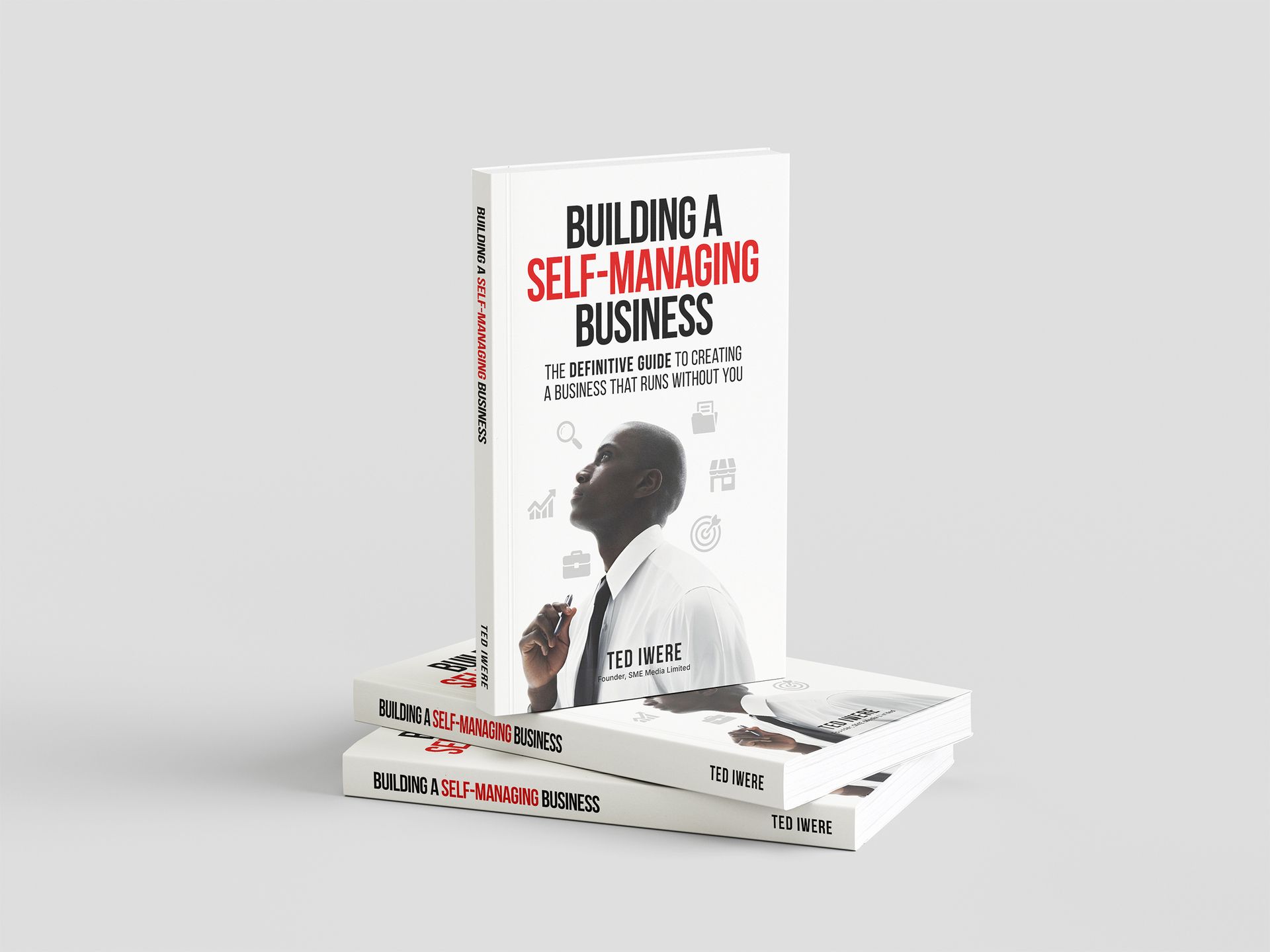
This article is adapted from our latest ebook – Building A Self-Managing Business. The complete resource includes empowerment frameworks, delegation templates, decision-making criteria tips, and progressive responsibility plans for systematically developing employee capabilities.
Grab a copy today to build a truly empowered team!
Ad - Book Your Luxury Vacation Home in Highbrow Ikoyi, Lagos

Find Your Perfect Short-term Stay in Ikoyi, Lagos.
Relax, Recharge and Experience Lagos. Unwind in top-notch amenities and stunning views. Discover a serene, equipped and stylishly furnished 1-bedroom haven. Book your home away from home!
Send a message to +234 809 673 8228 (Whatsapp) for more information
RESOURCES

HOW TO INVEST
Expert Business Guidance For Growth
Get expert guidance and support when you need it the most.
Our team provides personalised advice, helping you overcome challenges, achieve your goals and succeed in the Nigerian market.
Let’s work together!

BOOKS
Building A Self-Managing Business: The Definitive Guide To Creating A Business That Runs Without You
Did you build a business, or did you accidentally create a prison?
You started this journey for freedom, but if you can’t get through dinner without your phone ringing or take a vacation without checking email, you’ve hit the "Golden Handcuffs" phase. You aren’t just the boss; you are the bottleneck.
It is time to fire yourself from the daily grind and build a company that runs without you.
The "Building a Self-Managing Business" ebook is a 90-day roadmap tailored specifically for the Nigerian market. From navigating power costs to leveraging local tools like Paystack and Flutterwave, this ebook teaches you how to:
Escape the "Owner Trap": Move from doing everything to leading the vision.
Build Systems: Create SOPs that allow your team to make decisions without you.
Master Cash Flow: Protect your business against local economic shocks.

See us on YouTube
Receive our Newsletter
Join our Community
Visit our Website
Feedback
How would you rate this newsletter? Click here to share your thoughts
