- TED IWERE
- Posts
- Gas-Powered Freight Rail On The Lagos–Kano Corridor
Gas-Powered Freight Rail On The Lagos–Kano Corridor

Ted Iwere
February 17, 2026

Hello! Welcome to my weekly newsletter where I share ideas on entrepreneurship and business development. Feel free to sign up for 1:1 Coaching or Group Coaching on starting, growing or scaling your small business.
Dear reader,
IN THIS ISSUE
Traxport Rail Services: Gas-Powered Freight Rail On The Lagos–Kano Corridor
INVESTMENT OPPORTUNITY

Traxport Rail Services: Gas-Powered Freight Rail On The Lagos–Kano Corridor
Nigeria moves over 80% of its cargo by road. On paper, that sounds manageable.
In practice, it means deteriorating highways, port delays of 10 or more days in Lagos, chronic fuel costs, cargo theft, and a logistics bottleneck that inflates prices and stifles industrial growth across the country. With only 31% of roads paved, the challenges are structural and deepening.
Traxport Rail Services (TRS) is proposing a fundamentally different approach.
What Traxport Is Building
Traxport Rail Services is a Special Purpose Vehicle (SPV) created to develop and operate a gas-powered freight rail network along Nigeria's 1,126 km Lagos–Kano corridor - one of the country's busiest commercial routes. Using LNG/LPG dual-fuel locomotives, the network is designed to move containerised and bulk freight reliably between Lagos and Kano, with intermediate stops determined by customer demand.
The company has already secured a 35-year rail access agreement with the Nigerian Railway Corporation (NRC), completed a feasibility study through KPMG, and appointed the Bank of Industry (BOI) and Cordros as mandated lead advisers to raise equity and debt financing. Technical discussions are ongoing with CRRC (China), ABC (Belgium), Future Resources (Belgium), and Vecturis, who will serve as technical operators of the line.
Why Rail, Why Now
The timing is deliberate. Nigeria's Energy Transition Plan targets net-zero by 2060 and explicitly positions gas as a bridge fuel. Post-COVID demand for intermodal logistics has grown. The government is pushing public-private partnerships for rail rehabilitation. And rising diesel prices are making road haulage increasingly untenable for bulk shippers.
For companies like Dangote, BUA Group, Flour Mills of Nigeria, Olam, Tolaram, TGI, and Arewa Cotton - all of which Traxport is targeting for offtake contracts, the economics of switching to rail are becoming harder to ignore.
The Business Model
Traxport plans to price its freight rates 30 - 40% below current road transport costs, charging a fixed tariff per ton-kilometre based on volume and distance. The company projects it will transport over one million tonnes annually.
Each train is designed to carry up to 1,500 tonnes per trip; equivalent to roughly 50 forty-foot containers, compared to the 20 - 40 tonne capacity of a single truck. The scale advantage on bulk goods like cement, grains, and minerals is significant.
Beyond freight revenue, Traxport expects to generate $245 million in carbon credit sales over 15 years by displacing diesel-heavy road transport, a meaningful foreign exchange earner tied to the company's ESG positioning. Last-mile logistics will be handled by third-party haulage partners, including BHN and Red Star Logistics.
The Rail vs. Road Case
The competitive argument for rail on the Lagos–Kano corridor is straightforward:
Cost: Rail offers 30 - 50% lower cost per ton-kilometre, amplified further by gas-powered engines.
Capacity: A single train trip moves what would require between 37 and 75 trucks.
Reliability: Defined schedules replace the unpredictability of road congestion and closures.
Safety: Secured NRC and NSA-supported corridors reduce the cargo theft risk endemic to road freight.
Sustainability: Gas-powered rail cuts CO₂ emissions by up to 50 - 75% per ton-kilometre compared to diesel trucks.
What Traxport Is Seeking
The company is actively in conversations with institutional investors and is seeking strategic partners willing to co-invest across the rail freight and VGP verticals. The project offers first-mover advantage in Nigeria's rail-based freight and gas distribution sectors, alongside revenue streams from freight tariffs, gas transport fees, and carbon credit monetisation.
To explore the full investment case - including financial projections, technical specifications, route maps, and the complete KPMG feasibility framework - download the official Traxport Rail Services investor presentation below.
Ad - Book Your Luxury Vacation Home in Highbrow Ikoyi, Lagos

Find Your Perfect Short-term Stay in Ikoyi, Lagos.
Relax, Recharge and Experience Lagos. Unwind in top-notch amenities and stunning views. Discover a serene, equipped and stylishly furnished 1-bedroom haven. Book your home away from home!
Send a message to +234 809 673 8228 (Whatsapp) for more information
RESOURCES

HOW TO INVEST
Fluff-Free Insights You Can Use
Our research team provides specialised reports, market analysis and competitor intelligence to help you make informed decisions about entering and operating in the Nigerian market.
We connect you with local partners, distributors and suppliers, so you can maximise your chances of success.

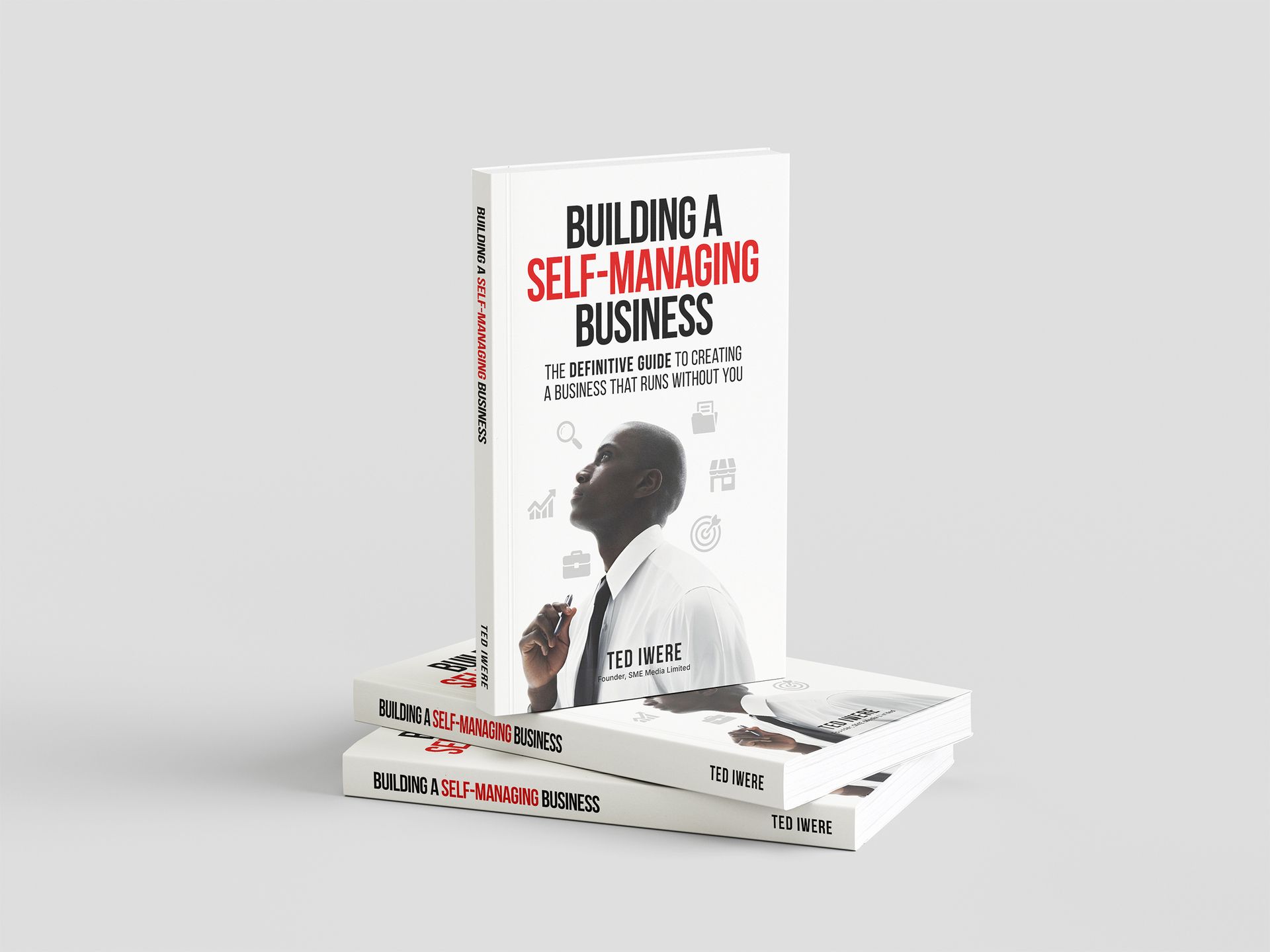
BOOKS
Building A Self-Managing Business: The Definitive Guide To Creating A Business That Runs Without You
Did you build a business, or did you accidentally create a prison?
You started this journey for freedom, but if you can’t get through dinner without your phone ringing or take a vacation without checking email, you’ve hit the "Golden Handcuffs" phase. You aren’t just the boss; you are the bottleneck.
It is time to fire yourself from the daily grind and build a company that runs without you.
The "Building a Self-Managing Business" ebook is a 90-day roadmap tailored specifically for the Nigerian market. From navigating power costs to leveraging local tools like Paystack and Flutterwave, this ebook teaches you how to:
Escape the "Owner Trap": Move from doing everything to leading the vision.
Build Systems: Create SOPs that allow your team to make decisions without you.
Master Cash Flow: Protect your business against local economic shocks.

See us on YouTube
Receive our Newsletter
Join our Community
Visit our Website
Feedback
How would you rate this newsletter? Click here to share your thoughts
